


Nanomedicine is transforming how we treat complex diseases by engineering therapies at the molecular level. This field holds the promise of delivering drugs directly to diseased cells, minimizing harm to healthy tissue and boosting treatment effectiveness. At the center of this revolution are PEG linkers, the molecular architects that make these advanced therapies possible.
What Are PEG Linkers?
Definition and key properties of PEG (Polyethylene Glycol) linkers
A PEG linker is a flexible polymer chain made of repeating ethylene glycol units. It acts as a molecular bridge, connecting a therapeutic agent (like a drug) to a targeting vehicle (like a nanoparticle or antibody). The core properties of PEG—water solubility, biocompatibility, and low immunogenicity—make it an ideal component for use within the human body.
At PurePEG, we manufacture highly pure, monodisperse PEGs. Unlike conventional PEG products that are a mixture of different molecular weights, our linkers have a single, precise molecular weight. This uniformity is critical for creating consistent and reliable nanomedicines, which is a key requirement for clinical translation and regulatory approval.
Importance in stability, solubility, and circulation of nanomedicines
The addition of a PEG linker, a process known as PEGylation, brings several crucial benefits to nanomedicines:
- Improved Solubility: Many potent drugs are hydrophobic (not soluble in water), which limits their use. PEG linkers are hydrophilic and can significantly increase the solubility of these drugs, making them suitable for injection.
- Enhanced Stability: The PEG chain forms a protective, hydrating layer around the nanoparticle or drug, shielding it from enzymatic degradation in the bloodstream.
- Extended Circulation: PEGylation increases the hydrodynamic size of the nanomedicine, preventing it from being quickly filtered out by the kidneys. This longer circulation time gives the therapy more opportunity to reach its target.
Current Applications of PEG Linkers in Nanomedicine
Targeted drug delivery systems
PEG linkers are fundamental to creating systems that can find and deliver drugs to specific locations, such as tumors. By using Heterobifunctional PEGs, researchers can attach a targeting ligand (like a folate molecule for cancer cells) to one end of the linker and a drug-loaded nanoparticle to the other. This ensures the nanomedicine selectively accumulates at the disease site.
PEGylated nanoparticles and liposomes
Liposomes and other nanoparticles are excellent vehicles for carrying drugs, but the body’s immune system often recognizes them as foreign invaders. PEG linkers create a “stealth” coating that helps these nanoparticles evade detection. Our specialized PEG-Lipid products, such as mPEG36-DSPE, are specifically designed to be incorporated into lipid nanoparticles (LNPs) for applications like mRNA vaccine delivery and gene therapy.
Antibody-drug conjugates (ADCs) in nanomedicine
ADCs are a powerful class of nanomedicine that combines the targeting precision of an antibody with the cell-killing power of a cytotoxic drug. The linker connecting these two parts is a critical component. The selection of the best PEG linker for protein conjugation in an ADC depends on the drug and target. For instance, a PEG linker for ADCs might be a Cleavable Linker that releases its payload only inside a cancer cell, maximizing efficacy while minimizing systemic toxicity.
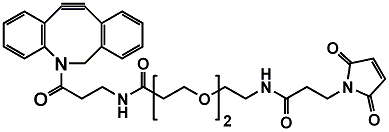
Featured Products


Innovations and Future Prospects in Linker Technology for Nanomedicine
Next-generation linkers usher in a new era of precision drug delivery
Amidst the wave of pharmaceutical innovation, linker technology is quietly propelling nanomedicine towards entirely new dimensions. The emergence of next-generation polymer structures has infused this field with vibrant dynamism. Innovative architectures such as multi-arm PEG not only enable multi-molecular synergistic effects but also resolve the immunogenicity challenges faced by traditional linear structures through sophisticated steric shielding effects. These advances complement breakthroughs in smart responsive linkers, collectively laying the foundation for precision medicine. Particularly noteworthy are the following four drug delivery systems featuring responsive mechanisms: those capable of acutely recognising the acidic characteristics of tumour tissue; those able to precisely capture signals released by overexpressed proteases (e.g., Mal-PEG2-Val-Cit-PAB-OH, Fmoc-PEG4-Val-Ala-PAB); those that ingeniously exploit intracellular reducing environments (e.g., disulfide linkers, diselenide linkers); and those responsive to external light guidance.
Modular platforms reshape the ecosystem of precision medicine
Amidst the tidal wave of personalised medicine, click chemistry-based modular platforms are quietly reshaping the landscape of drug development. This flexible technological framework enables researchers to freely assemble targeting units, therapeutic payloads, and imaging probes like building blocks, tailoring treatment regimens to each patient. This innovation not only accelerates progress in cancer therapy but also forges a robust link between gene therapy and precision medicine, heralding a new era of personalised treatment.
Linker technology pioneers a new paradigm shift in therapeutics
Looking ahead, the potential of connective sub-technologies is truly exciting. In oncology, smart drug conjugates and targeted nanoparticles are redefining treatment standards; gene therapy is overcoming historical technical barriers through advanced delivery systems; and the ideal of precision medicine is becoming within reach thanks to these technological advances. Underpinning these achievements is the continuous evolution of linker design principles—enabling more precise, safer, and effective therapies through fine-tuned regulation of pharmacokinetic behaviour.
Standardised systems safeguard the new frontier of nanomedicine
As nanomedicine matures, industry standards are rising in tandem. Monodisperse, high-purity PEG linkers have become fundamental requirements for product quality assurance, while comprehensive quality characterisation systems provide the critical safeguard for these innovative therapies to transition from laboratory to clinical application. These rigorous standards and processes are laying a solid foundation for the flourishing development of next-generation nanomedicine, filling us with confidence and anticipation for future medical innovation.
Conclusion
Today, PEG linkers are no longer just simple spacers. They are sophisticated, functional components that are central to the performance of advanced nanomedicines. From enabling stealth nanoparticles to orchestrating the targeted release of ADC payloads, they are indispensable tools in the modern therapeutic arsenal.
PurePEG has specialised in the PEG field for over a decade, with our products finding applications in nanomedicine delivery, in vivo and in vitro imaging, and hydrogel systems. Our high-purity, monodisperse PEG has enabled breakthroughs in numerous research endeavours. By optimising the pharmacokinetic properties of drugs, it indirectly enhances their targeting efficiency, thereby boosting therapeutic efficacy.
Click the link: https://purepeg.com/peg-products/ to access further details about our products.