


Cleavable vs. Non-Cleavable PEG Linkers: Key Differences and Applications
What Are PEG Linkers?
The PEG linker, composed of polyethylene glycol (PEG) polymer chains, serves as a critical molecular bridge in drug delivery systems. It connects the active drug (payload) at one end to a targeting carrier (e.g., antibodies, nanoparticles) at the other end. Its core value lies in overcoming traditional drug delivery bottlenecks through its structurally inert spacer chain.
Importance of PEG Linkers in Biotechnology
The ability of PEG linkers to improve drug efficacy by enhancing pharmacokinetics has revolutionized therapeutic approaches. The hydrophilic PEG corona significantly extends the half-life of drug delivery molecules by reducing protein adsorption and evading renal clearance. Simultaneously, PEG shields antigenic epitopes on drug molecules to lower immunogenicity, while its hydrophilic chains wrap hydrophobic drugs to improve solubility. Through cleavable designs, PEG further enables precise control over drug release kinetics. PEG linkers also support critical functions in the development of diagnostics and bioconjugates by improving molecular stability and compatibility.
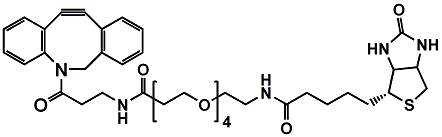
Featured Products



Understanding Cleavable PEG Linkers
Cleavable PEG linkers are pivotal in controlled delivery systems, offering unique advantages tailored to specific therapeutic and diagnostic needs.
What Are Cleavable PEG Linkers?
Cleavable PEG linkers are designed to break apart under predefined conditions, such as changes in pH, enzymatic activity, or exposure to reducing agents. Their adjustable responsiveness makes them ideal for applications requiring precise control over when and where a drug becomes active.
Advantages of Cleavable PEG Linkers
- Targeted Release: They enable the delivery of drugs to specific sites with precise timing.
- Reduced Side Effects: By releasing therapeutics only at the desired location, cleavable linkers help minimize exposure to healthy tissues.
- Customizable Sensitivity: Their breakdown can be triggered by a wide range of stimuli, making them adaptable across various applications.
Common Applications of Cleavable PEG Linkers
Cleavable PEG linkers are widely used in cancer treatment, particularly in antibody-drug conjugates (ADCs). They allow drugs to activate only when inside cancer cells, improving efficacy while reducing systemic toxicity. Additionally, these linkers are employed in biosensors, molecular imaging, and diagnostic tools to achieve controlled interactions.
Exploring Non-Cleavable PEG Linkers
Non-cleavable PEG linkers offer a contrasting value proposition, prioritizing stability and durability across their applications.
What Are Non-Cleavable PEG Linkers?
Non-cleavable PEG linkers form permanent bonds that do not degrade over time. These linkers are ideal for applications targeting long-term stability, ensuring reliable and consistent biological activity under physiological conditions.
Benefits of Non-Cleavable PEG Linkers
- Exceptional Stability: Their fixed structure guarantees performance over extended periods, even in challenging conditions.
- Decreased Risk of Byproducts: Because they do not cleave, non-cleavable linkers minimize unwanted byproducts that could interfere with efficacy or safety.
- Simplified Design: These linkers eliminate the need to design for controlled cleavage, streamlining product development.
Typical Uses of Non-Cleavable PEG Linkers
Non-cleavable PEG linkers are extensively used in creating PEGylated drugs that improve pharmacokinetic profiles by increasing solubility and reducing immunogenicity. Key examples of non-cleavable PEG products include:
- exo-BCN-PEG3-PA
- exo-BCN-PEG8-PA
- exo-BCN-PEG24-PA
- endo-BCN-PEG4-CH2CH2COOH
- endo-PEG8-CH2CH2COOH
- endo-PEG12-CH2CH2COOH
- endo-BCN-PEG24-CH2CH2COOH
- BCN-PEG3-Biotin
These linkers are frequently utilized for applications like modifying therapeutic proteins, enzymes, and diagnostic reagents to ensure consistent performance without degradation.
Key Differences Between Cleavable and Non-Cleavable PEG Linkers
Both types of PEG linkers serve essential roles, but their differences underline their suitability for specific purposes.
Structural Differences
The core structural distinction between cleavable and non-cleavable PEG linkers lies in the integration of bio responsive cleavage sites. Cleavable linkers (e.g., Val-Cit-PAB-PEG) incorporate labile chemical bonds within the PEG backbone, including:
- Disulfide bonds (-SS-): Reductively cleaved by intracellular glutathione;
- Peptide bonds: Specifically hydrolyzed by cathepsin B;
- Hydrazone bonds (-C=N-N-): Spontaneously hydrolyzed in acidic environments;
- Ester bonds (-COO-): Enzymatically cleaved by esterases.
In contrast, non-cleavable linkers (e.g., amide bond-PEG-ether bond) consist exclusively of stable covalent bonds. Their PEG chains extend via ether bonds (-CH₂-CH₂-O-)ₙ, terminated by amide bonds (-CONH-) or alkyl chains (-CH₂-) without predefined cleavage points.
Functional Differences
Functional divergences arise directly from structural designs:
Cleavable linkers act as “smart switches”, triggering rapid drug release (minutes to hours) under specific biological stimuli (e.g., tumor microenvironment: low pH/high GSH/overexpressed enzymes). This enables explosive drug release at disease sites, significantly enhancing local therapeutic concentration.
Non-cleavable linkers function as “sustained-release stabilizers”. They slowly release drugs via lysosomal proteolysis after cellular internalization , extending systemic circulation time. This suits therapies requiring prolonged action.
Suitability for Specific Applications
Cleavable linkers are typically selected for uses such as ADCs, where localized therapeutic activation is critical. Non-cleavable linkers, such as exo-BCN-PEG8-PA or Maleimide-DOTA, are preferred in drug PEGylation and molecular stabilization applications.
How to Choose the Right PEG Linker for Your Needs
Selecting the ideal PEG linker depends on understanding the specific requirements of the intended application.
Factors to Consider
- Application Objective: Is controlled release or extended stability more critical?
- Environmental Conditions: Consider whether the linker will encounter pH changes, enzymes, or other cleavage triggers.
- Molecular Compatibility: Ensure the linker integrates seamlessly with the biological system or target molecule.
- Project Scope: Assess whether the complexity of cleavable linkers aligns with your timeline and capabilities.
Where to Go from Here
Whether you’re working on advanced therapeutics, diagnostics, or molecular design, choosing the right PEG linker is an essential step to success. Non-cleavable linkers offer stable, long-lasting solutions for a range of pharmaceutical and biotechnological needs. Careful selection based on your project’s goals and environmental requirements will ensure you unlock their full potential. By leveraging the distinct advantages of PEG linkers, you can take your research and development efforts to new heights.