


Lipid nanoparticles, or LNPs, are transforming the drug delivery landscape, offering innovative solutions to some of medicine’s most pressing challenges. From mRNA vaccines to gene therapies, these tiny particles are unlocking groundbreaking possibilities in modern medicine. This blog explores their composition, mechanisms, applications, advantages, and the solutions our company provides to help researchers and developers fully harness their potential.

What Are Lipid Nanoparticles (LNPs)?
Definition and Composition
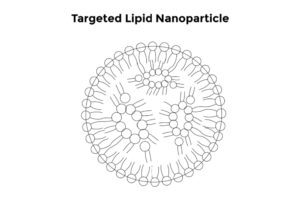
Lipid nanoparticles are microscopic spherical carriers composed of biodegradable lipids, measuring at the nanoscale. Their core function is to serve as delivery systems capable of effectively encapsulating and protecting therapeutic molecules—such as mRNA, siRNA, or small molecules—and transporting them into target cells. Renowned for their high delivery efficiency and biocompatibility, this technology is a key component of modern mRNA vaccines and numerous cutting-edge therapies.
Key lipids used in LNPs include:
- Ionizable lipids – Critical for forming stable particles and delivering cargo inside cells.
- Cholesterol – Provides structural integrity and enhances particle stability.
- Phospholipids – Facilitate membrane fusion for effective cellular delivery.
- PEGylated lipids – Improve the particle’s circulating time in the bloodstream by reducing immune system recognition.
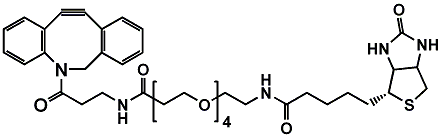
PurePEG offers PEG-Lipids with various types of lipid tail chains (e.g., DSG, DSPE, DAG, DMG), with the opposite end capable of attaching different reactive groups such as Azide, Propargyl, DBCO, and others required for click chemistry reactions. PurePEG’s core product line features high-purity, monodisperse PEG. We provide PEG-Lipid synthesized using monodisperse PEG and also accept customized requests to support your cutting-edge research.
Examples of select monodisperse PEG-Lipid products from PurePEG: DBCO-CONH-PEG45-DSPE, Biotin-PEG45-DSPE, Mal-NH-PEG45-DSG, mPEG45-DSPE.
How Lipid Nanoparticles Work
LNPs function as protective vessels, encasing delicate therapeutic molecules to shield them from degradation. Once introduced into the body, LNPs encapsulate their cargo and transport it to target cells. Upon reaching their destination, the particles are taken up by cells through endocytosis. The LNPs then release their cargo into the cytoplasm, achieving therapeutic effects with high precision. This mechanism ensures effective delivery while minimizing systemic side effects.
Featured Products


Applications of Lipid Nanoparticles in Modern Medicine
mRNA Vaccines and Beyond
LNPs gained global recognition during the COVID-19 pandemic as a critical technology behind some of the most successful vaccines. These vaccines proved how effectively LNPs could protect fragile mRNA, enhance immune response, and ensure efficient cellular uptake. Beyond the pandemic, LNPs are being explored for other vaccine platforms, including for diseases such as influenza and HIV.
Gene Therapy and RNA-Based Therapeutics
The delivery of RNA-based therapies, such as siRNA, mRNA, and gene-editing technologies like CRISPR, has been revolutionized by LNPs. These treatments rely on LNPs to supply genetic materials safely and efficiently to specific cells, opening new frontiers in treating genetic disorders, rare diseases, and beyond.
Oncology and Targeted Drug Delivery
LNPs are also proving invaluable in oncology, where targeted drug delivery reduces toxicity and improves efficacy. By encapsulating chemotherapy agents or nucleic acids, LNPs can be directed to tumor sites, sparing healthy tissues and enhancing therapeutic outcomes.
Advantages of Lipid Nanoparticles in Drug Delivery
Improved Bioavailability and Stability
LNPs protect therapeutic molecules from degradation in the bloodstream, boosting their bioavailability and ensuring they remain stable until they reach target cells.
Targeted Delivery and Reduced Toxicity
By delivering drugs directly to specific cells or tissues, LNPs minimize off-target effects and reduce toxicity, making treatments safer for patients.
Scalable and Versatile Formulation Platform
LNP technology is flexible and scalable, adapting to a variety of therapeutic molecules and payloads, which makes it ideal for both research and commercial pharmaceutical applications.
Design of Lipid Nanoparticles Using Monodisperse PEG-Lipids
Advantages of Introducing PEG Chains
In PEG-Lipid, the PEG chains provide a hydrophilic “protective shell” that significantly reduces particle aggregation, resulting in enhanced colloidal stability. Simultaneously, by minimizing plasma protein adsorption (reducing opsonization), PEG-Lipid extends the in vivo circulation time of LNPs, thereby improving delivery efficiency within the body. Its hydrophobic tail bonds firmly to the lipid bilayer, enabling gradual in vivo PEG shedding for controlled particle exposure and cellular uptake.
Furthermore, PEG-Lipid significantly improves LNP particle size distribution, reproducibility, and long-term storage stability, making it a critical design element for creating scalable, manufacturable, and clinically applicable LNP platforms.
Advantages of Monodisperse PEG
Monodisperse PEG-Lipid, characterized by its completely uniform molecular structure and precisely controllable chain length, is recognized as a next-generation key material for high-performance LNP (lipid nanoparticle) and nucleic acid delivery systems. Compared to traditional polydisperse PEG-Lipids, the monodisperse version significantly enhances batch-to-batch consistency, particle size controllability, and loading reproducibility in formulations. It reduces issues such as particle size drift, increased PDI, and structural heterogeneity at the source.
Their uniform PEG chains enable more precise regulation of LNP surface hydrophobicity/hydrophilicity balance, resulting in more stable particle structures, reduced aggregation, and optimized plasma protein binding patterns. This improves circulation half-life, tissue distribution, and in vivo stability. Furthermore, the predictable de-PEGylation kinetics of monodisperse PEG-Lipid facilitate more stable control over cellular uptake and endocytosis processes, enhancing mRNA/siRNA delivery efficiency.
Overall, monodisperse PEG-Lipids provide enhanced structural controllability, predictable in vivo behavior, and manufacturing consistency for LNPs, establishing them as a core building block increasingly valued in advanced nucleic acid therapeutics and nanodelivery systems.
Your Dedicated Monodisperse PEG Supplier of Choice
PurePEG has specialized in the field of monodisperse PEG for years. Our products utilize proprietary R&D technology to ensure stable monomolecular weight distribution and high purity of 99%. Our team of professional chemists can accommodate your customized requirements, provide ongoing support throughout your experimental progress, and assist in resolving any questions that arise when using our products.